Rest and pain medicine can quiet symptoms without correcting the problem that keeps provoking them. By tracking the pattern of pain, recognising urgent warning signs and understanding what an evaluation checks, you can decide when to modify activity, book an appointment or seek immediate care.
Key takeaways
- Rest can calm symptoms without repairing cartilage, tendons, ligaments, or meniscus damage.
- Recurring pain can point to arthritis, instability, tendon injury, or an altered movement pattern.
- Seek urgent assessment for a hot, swollen joint, deformity, fever, numbness, or sudden weakness.
- Arrange evaluation when pain repeatedly returns, limits movement, or does not improve as expected.
Why does joint pain return after rest or medication?
Joint pain after rest can return because rest calms irritation without correcting the problem causing it. Inactivity may reduce swelling and pressure, but it cannot stabilise a loose joint, repair damaged cartilage, tendon, ligament or meniscus, or correct an altered movement pattern that keeps shifting stress.
Complete rest can also weaken supporting muscles, leaving the joint less protected when you resume activity.
Medication has the same limitation. Ibuprofen or naproxen can reduce pain and inflammation, while paracetamol can reduce pain, but these medicines do not repair a torn structure or reverse osteoarthritis. This is temporary pain relief, not treatment of the underlying cause of joint pain, so symptoms can return when the medicine wears off.
Recurring joint pain can come from tissues near the joint or from a nerve rather than from the joint surface itself:
- Bursitis or tendinopathy around the joint
- A meniscal or ligament injury
- Referred pain from the spine or hip
- Inflammatory disease affecting the joint lining
Pain returning does not automatically prove progressive damage, and an X-ray cannot rule out soft-tissue injury or inflammation. Arrange an assessment when recurrence limits movement, strength, walking or everyday tasks instead of repeatedly relying on rest or self-medication.
What condition might be causing the same joint pain repeatedly?
The pattern of recurrence points more strongly to the cause than the joint’s location alone. Pain can come from cartilage, synovial lining, bone, tendons, bursae, ligaments or nerves, and its intensity does not always match an X-ray finding.
| Condition | Clues that pain keeps returning | What rest or medication misses |
|---|---|---|
| Osteoarthritis | Activity-related pain, brief stiffness after rest, reduced range of motion | Cartilage wear, weakness and altered joint loading |
| Rheumatoid arthritis or another inflammatory arthritis | Morning stiffness lasting over 30 minutes, several swollen joints, psoriasis, bowel disease or eye inflammation | Ongoing immune-driven synovial inflammation |
| Gout | Sudden, severe attacks with redness and swelling, often in the big toe, ankle or knee | Uric-acid crystal deposits between attacks |
| Bursitis or tendinopathy | Localised tenderness; pain with pressure or a specific movement rather than every joint movement | Repeated friction, overload or tendon degeneration |
| Meniscal or ligament injury | Pain after twisting, catching, locking, giving way or persistent swelling | A torn structure or unstable joint |
| Post-traumatic damage | Symptoms that continue after a fracture, dislocation or major sprain | Cartilage damage, poor alignment or instability |
Pain in a hip or knee can also come from the spine; tingling, numbness or weakness suggests nerve involvement. A hot, swollen joint with fever or feeling unwell needs urgent assessment for infection, not another round of self-treatment.
How can you tell whether rest is helping or making recovery slower?
Rest is helping when swelling reduces, your walking tolerance improves, the joint range of motion returns, and everyday tasks become easier. If pain eases but stiffness, weakness, limping or loss of function increases, complete immobilisation is slowing recovery.
1. Check swelling each day. Increasing warmth, fluid or visible puffiness after ordinary activity means reduce the load and arrange assessment if it persists.
2. Test function, not pain alone. Note how far you can walk, climb stairs, grip, dress or rise from a chair. Progress means doing more with the same or less discomfort.
3. Use relative rest for an irritated joint: stop running, lifting or twisting that triggers symptoms, but continue comfortable movement. Avoid keeping the joint still all day.
4. Restore movement gradually. Perform gentle bends and straightening within a tolerable range, then increase walking duration or resistance in small steps.
5. Add therapeutic exercise for joint pain when swelling is controlled. Strengthening the muscles around the joint and maintaining aerobic fitness support stability and function. Mild short-term soreness after starting does not automatically mean damage; reduce the range, load or frequency if symptoms remain worse the next day.
Seek assessment after a significant injury if you cannot bear weight or use the limb, or if marked swelling, deformity, locking or instability appears. Arrange a planned review when pain repeatedly limits sleep, work, self-care or exercise despite an adequate trial of relative rest and gradual activity.
Which joint pain warning signs need urgent assessment?
Seek urgent medical care instead of taking more pain medicine when joint pain comes with a hot swollen joint, fever, or feeling unwell. This pattern raises concern for septic arthritis, an infection that can rapidly damage cartilage and spread through the bloodstream.
After a significant injury, seek assessment if you are unable to bear weight, cannot use the limb normally, or notice deformity, marked swelling, locking, or a joint that repeatedly gives way. These signs can indicate a fracture, dislocation, or major ligament, tendon, or cartilage injury that rest will not repair.
| Warning sign | What it may indicate | What to do |
|---|---|---|
| Hot swollen joint with fever or severe sudden pain | Septic arthritis or another serious infection | Seek emergency assessment today |
| Deformity or inability to bear weight after injury | Fracture or dislocation | Attend urgent care; do not force movement |
| Numbness, weakness, or worsening limb control | Nerve-root compression or another neurological problem | Arrange urgent medical assessment |
| New bladder or bowel problems with back or leg pain | Significant spinal nerve compression | Seek emergency care immediately |
Do not treat progressive neurological symptoms as an isolated knee, shoulder, or hip problem. Pain with tingling, numbness, or weakness can come from the neck or lower back, and new bladder or bowel problems require emergency evaluation.
Arrange prompt medical review for persistent morning stiffness, several swollen joints, psoriasis, inflammatory bowel disease, or eye inflammation. These features can point to inflammatory arthritis rather than a problem that repeated self-treatment will solve.
When is a joint pain evaluation or treatment plan necessary?
Arrange a routine orthopaedic review when pain disrupts sleep, work, walking, self-care or exercise; keeps returning after a proper trial of rest, activity modification or medication; or comes with swelling, stiffness, weakness, numbness or reduced movement.
A hot, swollen joint with sudden severe pain and fever needs emergency assessment for septic arthritis, not a routine appointment.
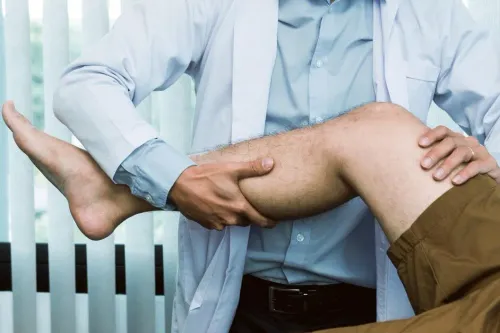
At the visit, the clinician will review the pain’s pattern, previous injuries and medicines, then examine alignment, swelling, warmth, stability, range of motion, strength, sensation and walking.
Tests depend on the suspected cause: an X-ray can show fracture or osteoarthritis changes, MRI can assess cartilage, menisci, ligaments and bone, and ultrasound can examine fluid, tendons and bursae. Joint-fluid analysis helps identify infection, crystals from gout and inflammatory arthritis.
Joint pain treatment options should match the diagnosis, not simply increase painkillers. They can include therapeutic exercise, weight management where relevant, topical or oral medicines, and an injection when targeted relief is appropriate. A steroid injection may reduce inflammation for a limited period; it does not repair damaged cartilage or replace rehabilitation.
Long-term opioids are not a default solution because dependence and side effects can leave the underlying problem untreated.
Dr DineshRam Orthopedician ECR can help separate joint disease from tendon, muscle, nerve or referred spine pain before selecting treatment. Surgery is considered when structural damage causes major loss of quality of life and non-surgical care has failed or is unsuitable, after discussing risks, benefits and expectations.
Related service
Joint pain can affect your ability to move, work, and enjoy daily activities. It’s often caused by conditions like arthritis, overuse, or injury. View service → |
Frequently asked questions
Why does joint pain return after rest or medication?
Rest and medication can reduce inflammation and pain without correcting instability, tissue damage, arthritis, or movement patterns that keep stressing the joint.
What conditions can cause the same joint pain repeatedly?
Recurring pain can result from osteoarthritis, inflammatory arthritis, tendon or ligament injury, meniscus damage, joint instability, or referred pain from the spine.
How can you tell whether rest is helping or slowing recovery?
Rest is helping when pain and swelling steadily improve while movement returns. Recovery may be slowing when stiffness increases, strength falls, or pain returns with ordinary activity.
Which joint pain warning signs need urgent assessment?
Seek urgent assessment for a deformed joint, inability to bear weight, sudden weakness or numbness, a hot swollen joint with fever, or severe pain after an injury.
When is a joint pain evaluation or treatment plan necessary?
Arrange an evaluation when pain keeps returning, lasts beyond expected recovery, restricts daily activities, or fails to improve with appropriate self-care.